I acknowledge the Traditional Owners on whose land I walk, I work and I live. I pay my respects to Elders past, present and future.

Sunday, 24 July 2022

The mysterious Caterina Cordelia


As an historian with a particular interest in sugar and migration history I find myself immersed in predominately primary and secondary sources written by men. Fleshing out the lives of women from the few women’s memoirs and the men’s insubstantial recordings of women’s lives on the north Queensland frontier is no easy task. 

The invisibility of women in the history of the Herbert is typified by the mysterious Caterina Cordelia and begins with the land upon which she walked. White men named the geomorphological features they observed, in complete ignorance of the names already given those features by the Indigenous landowners. The features were given names according to physical attributes, for example Valley of Lagoons, Stoney Creek or Waterfall Creek, or named after prominent male identities. Hence the Herbert (named Bagirr by the Warrgamay) was named after colonial secretary and later Queensland’s first premier, Robert G Herbert while Stone River was named after the aforementioned Henry Stone, Ingham after the failed planter William Bairstow Ingham, Halifax after George Montagu Dunk, Earl of Halifax Secretary of State in England from 1763 to 1765, and so on.  Disproportionately few to the European male appellations were Indigenous names. Examples though, are Jourama Falls (singing or murmuring waters), or Toobanna (plenty of big rushes near water).[i] The same was for European female place names. The latter include: Francis Creek named after Mrs Francis Allingham of Waterview Station, Helen’s Hill and Mount Helen named after a daughter of William Ewan of Waterview (its Indigenous name of Mandabin or Mandalin was ignored) and Mount Cordelia, Mount Catherina, Cordelia Creek and Catherina/Catterina Creek named after the enigmatic Caterina Cordelia — the spelling of whose christian name is disputed, while it is not known whether Cordelia was her surname or a second christian name.[ii]

Cordelia Vale homestead 1883 along the Lower Herbert River. The old McKenzie house from the Gairloch.
Source: Flickr Hinchinbrook

According to local lore an Italian woman, Caterina Cordelia, arrived on the Herbert as the housekeeper for a Maurice O’Connell.[iii] The honour of the first plantings of sugar in the Herbert River Valley is awarded to licenced surveyor, Maurice Geoffrey O’Connell, his brother John Geoffrey O’Connell and William McDowall (McDowell).[iv] By 1869 the O’Connell’s had abandoned their venture and forfeited their lands. McDowall, who actually come to the Herbert looking for pastoral land, left in1870 to pursue a pastoralist’s life. That Caterina should be with the party in 1868 was a remarkable example of fearlessness and sense of adventure. At the time, on the lower Herbert, there were no public facilities as the European population numbered little more than 12 people, while clearly the party had not considered what they would do with any crop they produced for there was no mill to crush their cane, nor did they have the resources to build one of their own. The blunt reality was that their enterprise had no possibility of expanding and their cane had no market.[v] And why or how Maurice inveigled Caterina to accompany him will forever remain a mystery. Housekeeper could be a euphemism for a more intimate relationship and some infatuation on the part of O’Connell is indicated by several landscape features being named after her. What happened to the O’Connells and McDowall can be tracked through newspaper reports and documents, but Caterina Cordelia remains an enigma

SOURCES:

[i] Family history of the district: Landmarks, streets, parks or buildings named after local ancestors, Herbert River Express, Ingham, n.d., p.20.

[ii] Queensland place names search, https://www.dnrm.qld.gov.au/qld/environment/land/place-names/search#/search=Catherina%20Creek&types=0&place=Catherina_Creek6521; and Map. Parish of Cordelia, County of Cardwell, Survey Office, Department of Public Lands, Brisbane, October 1922.Variously spelt also Caterina, and Catterina.

[iii] Alec S Kemp, The Kemp Report, Second instalment of History of the Herbert River: The dawn of sugar, unpublished text, n.d., p. 5.

[iv] Queensland Government, Queensland Government Gazette vol. X, 1 January to 31 December 1869, p. 361; Douglas R. Barrie, Minding My Business: The History of Bemerside and the Lower Herbert River District of North Queensland Australia, Douglas R. Barrie, Ingham, 2003; and Bianka Vidonja Balanzategui, The Herbert River Story, Hinchinbrook Shire Council, Ingham, 2011.

[v]  ‘Cardwell and the Vale of Herbert’, Queenslander, 23 September 1871, p. 10. 

Thursday, 17 March 2022

Edward Charles and Christina (nee Beatts) BIGGS

Edward Charles and Christina (nee Beatts) Biggs 

A Snapshot of Life in the Young Settlernent

Written by Noela Costello of Sydney, formerly of Halifax and lngham. My thanks to my cousin Tim Kemp who found the articles whilst researching old newspapers. Also to my sister Janet, my niece Janelle and various cousins for their help. June 2014

If you have ever been in Mercer Lane you would have seen the family stories on the laneway posts. They are riveting reading of days long past and of families who, in many different ways, have contributed to life in this district. This is one of those stories which I have been kindly given permission by family to reprint here. It is long but so very worth the read. 

Edward, a carpenter, was born in Newport, Wales in 1861. He landed in Townsville in 1882 with a passage ticket to Brisbane. lt was the fact that he missed the boat when it sailed that brought him to the Herbert River District the following year. 

Christina was born in Liverpool, England, to Scottish parents in 1868. She arrived in Townsville with her mother and three siblings on the S.S. "Quetta" in 1883, reuniting with her father who arrlved at the Herbert a year earlier. He had signed off as a crew member of the S.S. "Nevada" in Newcastle N.S.W. in that year. 

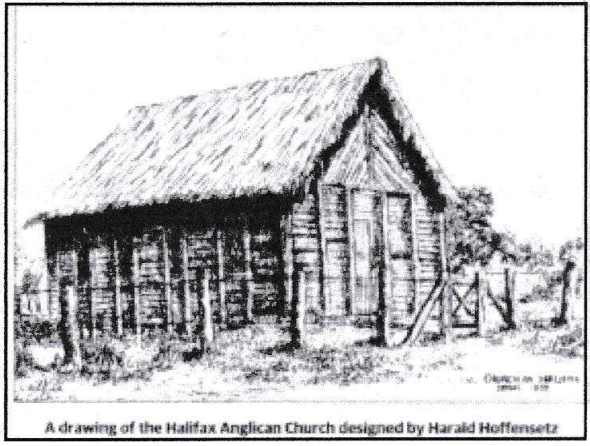
ln 1886 Grandfather and Gran were the first couple to marry in the new Halifax Anglican Church, built of mangrove timber and split palms by the early settlers. 


After Edward's and Christina's marriage they lived at Macknade Estate where Grandfather worked as a carpenter. ln 1887 Grandfather embarked on a land venture in the Four Mile area - a freehold block - in partnership with three others. He acquired full ownership in 1889. "Springfield" as it was named consisted of 1280 acres. He developed it chiefly as a cattle breeding proposition, although he had 50 acres under cane in L890. 

ln early 1893 while Grandfather was absent on business a serious grass fire occurred, reducing to ashes his crop, yards, stables and other effects. The dwelling of grass thatching was saved by Gran, her sister and young children. 

During their time at "Springfield" four children were born - Madge in 1887, Glad 1889, Fanny 1890 (dying seven days later) and Bill in 1891. Gran used to tell us stories of walking into Halifax for supplies, usually with a child on each hip, and meeting Aborigines on the way. They became quite fond of Gran, so much so that they presented her with a Nulla Nulla (a war weapon) which remained on the back porch of " Agra House" (Gran's home in Halifax) for many years. 

We know how hard the early [European] settlers worked clearing land, building houses, fences etc but by the 1880's they did find time to 'play'. 

ln 1883 the school building was completed and was the venue for weekend dances, 'penny' (one cent) concerts and the annual 'Break-up Day'- a community picnic day. Grandfather was a member of a comedy group "The Halifax Minstrels" that played to packed houses at the concerts. 

After the fire Grandfather returned to his position at Macknade Mill, and with Gran and family moved into a mill house. Two more children were born - Evelyn in 1893, Elsie in 1896. 

While at Macknade Grandfather sold "Springfield" and took up a farm on the Macknade Estate which he named "Newport" after his old home in Wales.

ln 1893 the two oldest children, Madge and Glad, were enrolled at the Provisional School Macknade. ln 1894 Grandfather was elected to the school committee.


At Newport" four more children were born - George, the twins Alice and Bob (Bob dying at nine months) and Charles Edward (dying at ten months). 

During the period two balls were held at Macknade Mill. The first, in December 1892 was to celebrate the end of the season. lt was held in the Sugar Room which had been cleared of mountains of sugar for the occasion. Hanging in the middle of the room was a large Punka [Punkah - a type of fan] with the words "A Merry Xmas" painted on it. This was kept going until dawn when dancing ceased, and made the room deliciously cool. Music was provided by piano and Mr John Anderssen on the violin. 

The ladies' gowns were charming and varied. However the person who appeared to have the most admirers was Grandfather who, assisted by Mr Wiskar (Gran's future brother-in-law) and others, presided at the bar. He showed himself to be as adept with the corkscrew as he was with the cricket ball. 

A second ball was held in the Sugar Room in 1893, again to mark the end of the crushing season. The music was provided by Messrs Pearce, Anderssen, Johnson and Young. Great credit was given to Mr Wiskar, the secretary, and Grandfather who served as M.C., for the efficient manner in which the arrangements were carried out. Again the ladies looked charming in their colourful, hand sewn gowns. Amongst the ladies present were Mrs Alm, Mrs Carr, Gran, Mrs Beatts (senior) Mrs J. Beatts, Mrs Skinner, the Misses Alm, the Misses Rosendahl, Miss Scott, Miss Beatts and Miss Herron. 

The popular dances at this time were the waltz and tango. ln 1914 the foxtrot made its debut.

The information above was taken from the 'Ladies' Page' of the "North Queensland Register". On the same page were sewing tips and recipes for savoury toasts, sardines, and egg and anchovy- Recipes were usually handed down from mother to daughter, but in 1861 Mrs Beetson published her famous "Book of Household Management" which by 1868 had sold over two million copies. 

ln the 1890s picnics were quite the rage, involving travel to the beaches and occasional overnight stays. 

ln 1895 cricket was featured in a news article. A match was arranged between the 'Australians' and 'Allcomers'' According to the article, "the 'Australians' have the strongest team, and it will take the 'English' and 'Allcomers' all their time to beat them." To me, this begs the question "Who were the 'Australians'?" 

ln the young settlement the horse would have been man's best friend. lt was used for transport - riding, pulling sulkies and buggies and taking children to school. The draught horse was used for farm work such as pulling drays, ploughs etc. sadly, serious and sometimes fatal accidents occurred often when a horse shied, throwing the rider, or bolted when suddenly frightened.

Our early settlers were also troubled by pests like ticks, bandicoots and cane beetles. They built dips to rid the horses and cattle of ticks. ln 1899 Felice Regazzoli (Gran's brother-in-law) was successful in having a bandicoot trap filed at the lnternational Patents office in Sydney. ln 1897 it was reported that the cane beetle had decreased in numbers due to a subsidy from the government which paid collectors quite handsomely. The beetles were collected by placing a white sheet with a bright light under a tree and then shaking the tree vigorously. ln later years the cane toad was introduced to eradicate the cane beetle, and what a pest the cane toad has become! 

Obviously Grandfather was a member of the Hinchinbrook Divisional Board for Subdivision 3 because in 1897 he was returned unopposed to the Board. At this meeting a notice of motion was brought forward suggesting an alteration to the timetable of trains run by the C.S.R. Company Ltd. 'At the moment travellers from the north are unable to travel to lngham when they arrive at Lucinda Point. lf the C.S.R. would agree to put on an extra train, all this would be avoided.' 

Eighteen hundred and ninety seven was quite a busy year. The Halifax Rifle Club played a match against the Johnstone River Club. Some of the shooters were A.W. Carr, E. Regazzoli, J.A. Menzies (Gran's cousin) and F. Robinson. As well, nominations for the Boxing Day Races were declared at a meeting of the Halifax Jockey Club. There were 58 horses, and all were local. 

ln 1899 Grandfather made a sea voyage back to Newport, Wales to visit his parents and family members. To mark the occasion of this visit, he was presented with a very ornate time piece barometer which remains proudly in the possession of a grandson.

ln 1898 the Herbert River Pastoral and Agricultural Association held their first show. ln the 1902 show, horses appeared to be the popular exhibit as quite a bit of space was allotted to them in the "North Queensland Register". Grandfather was a member of the committee as well as being an exhibitor. He exhibited 'Prince', 'Colonel' and 'Donald' in the draught stock section. ln the Light Harness Horse or Mare, Grandfathe/s 'Starlight' came second. There were many different events for horses. 

In 1903 Grandfather purchased 'Mona' farm for five hundred pounds (1,000 dollars) from the Commercial Banking Co. of Sydney. At 'Mona' he had about 70 acres under sugar cane and 220 acres of grazing land. 'Mona' had common boundaries with 'Norwood' farm, owned by John L. Beatts (Gran's brother) and 'Rest Downs' farm owned by Harald Hoffensetz {John Beatts' father-in-law). 


At 'Mona three more children were born - Jessie 1904 and twins Tom and Gwen in 1906. From 1905 the Biggs children were enrolled at the Halifax State School - Bill, Evelyn, Elsie and George in 1905, Alice in 1906, Jessie in 1911 and Torn and Gwen in 1913. 

Grandfather built 'Mona' homestead, which was quite large to accommodate ten children. It was set in the midst of palm and mango trees, well kept lawns, flower beds and a fernery (Gran's passion). These all added to the charm of this very desirable home. People lived in 'Mona' homestead until Cyclone Yasi in 2011 caused considerable damage. However Terry Carr, a great grandson, is hoping to restore the home as the timber is still in good condition. 

Grandfather was regarded by his younger children as a disciplinarian, but he was actually very good to them. He saw that they were well educated. Bill, his oldest son, attended Gatton Agricultural College in his teens. Grandfather built a tennis court on 'Mona' and arranged social tennis weekends. He supported his children in district competitions. They all had good singing voices and were involved in district choirs. 

ln 1914 World War 1 erupted. lt was to be a devastating war - a war in which 2.5 million of Australia's youngest and strongest enlisted. Three hundred and fifty thousand would never return and one million returned wounded, ghosts of their former selves. Many young men from the Herbert enlisted. Gran and her family would have grieved with her brother John and his family when their oldest son John Beatts was killed in action in 1917. They would again have worried and prayed with Gran's sister Aggie and her family when their oldest son John Regazzoli was reported missing in action for a lengthy period. He was found to be a prisoner of war in Germany. 

The Australian Red Cross was established on 14th August, 1914. Fine work was achieved by this organisation and many others, as they collected funds to send food parcels, hand knitted scarves and socks, and helped our soldiers in so many ways. Branches were quickly formed in towns and cities throughout Australia. On 22nd September 1914, at a well attended meeting in Halifax, it was resolved that all present would form a committee to be called The Halifax Red Cross League'. Gran was in the chair; Mrs Allison was secretary and Mrs Vignolia treasurer. lt was decided the Halifax branch was to collect funds and raise cash by holding dances, euchre (a popular card game), parties etc. Price of admission to the dances was to be set at one shilling and sixpence (16 cents). 

ln 1921 Rosina (Grandfather's youngest sister) arrived from Wales and spent about five months with the family at 'Mona'.

Grandfather died in 1924 from tongue and throat cancer. Sadly, just over two weeks later his oldest son Bill, who had helped nurse Grandfather during his illness, died whilst having his appendix removed. He left a wife and five young children.

After Grandfather's death Gran had a house built in Anderssen Street Halifax, which she called 'Agra House' after her grandmother's home in Scotland. Gran and her unmarried daughters lived there. She leased 'Mona' to her two sons George and Tom. This proved unsatisfactory so she leased 'Mona'to her daughter Elsie and her husband Sticks Carr, who purchased 'Mona' after Gran's death in 1945. 'Mona' remains in the Carr family to this day. 

I am not sure of the year the first motor car arrived in the Herbert, but I do know that Felice Regazzoli owned it. In an article in "The western Champion" (Barcaldine) in Decembee 1924 it was noted that a family named Regazzoli had had remarkable luck in Art Union Drawings some years before. Mr Regazzoti (snr.) won first prize - a black Buick - in an Art Union and just some weeks ago Mr F. Regazzoli (jnr.) won a Hudson super six in the Toowoomba Public Hospital's Art Union. The question was asked, 'May we soon see a Golden Casket go that way?' 


ln the 1920's the Carr Brothers operated the Austin Agency in the district, selling both cars and tractors. Even though there were so few cars on the road there were accidents. As you can imagine the roads were just bush tracks and full of pot holes. My mother, Miss Gwen Biggs, was involved in two accidents while driving. The first was on the Taylor's Beach Road - she rolled the car. My cousin, Beth, who is now 90 was four or five years old at the time and was in the car. Fortunately nobody was injured and they were rescued by relatives following in the car behind. The second accident occurred in 1928 on the main road from Halifax to lngham. Mum again rolled the car, trying to avoid a cyclist who had crossed to the wrong side of the road. Gran, who was travelling with Mum, injured her shoulder and was conveyed by ambulance to the lngham Private Hospital. The cyclist was admitted to the General Hospital with a knee injury.

ln !927 a tropical cyclone formed, resulting in heavy rain. The Herbert River broke its banks, causing heavy flooding in the Herbert Valley. Hundreds of people were forced to leave their homes. Many houses were washed away and twenty three people were drowned. This number included the lngham ambulance superintendant, who was attempting to reach sick people. The loss of crops, property and stock was considerable - some 2500 cattle and 1500 horses were drowned. The one level Halifax traffic bridge was also washed away. 

I don't know how the early settlers in 1927 were warned that a cyclone was approaching, but when we were children the post master would fly a red flag at the post office to warn everyone. This would cause much hovering by Gran, Jess and Mum in front of Grandfather's barometer to check the deteriorating weather.

ln the early 1930s Gran converted 'Agra House' into two flats to accommodate her daughter Alice (Cockburn) who had lost her husband, and her three young children - John (world renowned artist), Ann and Margaret. Alice and Jess operated a drapery store - 'Biggs and Cockburn' - for a few years in Halifax. Alice and her family moved into accommodation attached to the store.

In 1937 Mum (Gwen) with three young children Janet, Bill and Noela, moved into 'Agra House'- her marriage having ended. Mum lived in 'Agra House' until 1990 when she moved into 'Blue Haven'. ln 1939 the world was at war again. ln 1942 there were fears that a Japanese invasion of Australia threatened. Gran with her daughters Glad, Elsie, Jess and Gwen, her daughter-in-law Audrey, her niece Ruth and all their children evacuated to Glen Morgan in south west Queensland, below the Brisbane line' All of Queensland north of the Brisbane line was to be left undefended should the Japanese invade. Many families evacuated or had plans in place should this occur. We swelled the population of Glenmorgan, a town of one shop, a small one teacher school, one hotel and about ten houses. Husbands who weren't in the forces remained at home to work the farms. As well the Carr brothers served as coast watchers - they had to report any planes flying over or any unusual activity on the coast. 

We all returned to Halifax in June, after the 'Battle of the Coral Sea', when it looked as though, with the help of the Americans, our Australian forces were getting the better of the Japanese. lt would be another three years before peace was declared. Again there would be great loss of life and terrible atrocities carried out on our soldiers in prisoner of war camps. 


Gran died peacefully in her sleep at 'Agra House' in December 1945, having borne thirteen children and lived through two world wars. She was blessed to have a loving family who all adored her. 

As you can see by this story Gran, Grandfather and family were very much involved in the young settlement of Halifax. They, along with all the early settlers, showed resourcefulness that made it possible to overcome the hardships and difficutties which crossed their paths. Their spirit enabled them to combat sickness, trouble and sorrow with strength that words cannot describe. 

Friday, 20 August 2021

JOSIE SHEAHAN 1932 – 2020


*This is a lengthy blog but a beautiful tribute to a both a beautiful and generous woman so worth including here in its entirety. As an historian I am every grateful to Josie's tenacious work to preserve the history of this district. I am grateful to Vivienne and Christopher Parry and Kerry Davison and the Sheahan family for this touching and fulsome tribute to Josie.*


1949 Josie in VAD uniform              Dan, Molly, Shaun,                                                                Josie and family

Josephina Rosa Miguel, “Josie” Miguel, was born to a Spanish immigrant family in February 1932, and as she proudly would say was the same age as the Sydney Harbour Bridge.

Her grandfather, Antonio, came to Australia in 1907 to work in the canefields and his wife Teodora and two sons, Joseph and John followed in 1910. By this time Antonio was cutting cane with a gang on 10 acre blocks at Beeva, and Teodora joined with another of the wives in cooking for  the gang of men.  What a different and challenging life these migrants had, but they took it willingly with gusto and appreciation of the opportunities offered by this new and wonderful country.

In 1929 at age 26 Josie’s father, Joe, went on an overseas trip with his friend Joe Donatiu from Innisfail.  They sailed via Suva, the US, through Europe and ended in Spain.  As the family hailed from Catalunya he visited there first.  In San Feliu de Guixols, he met and courted Dolores “Lola” Rabionet, married her there and brought her back over to join his family at Hawkins Creek.

Josie’s early life was a happy one on the Forest Home farm at Hawkins Creek.  Her beloved sister Mary was born in 1934.  As she said in her Miguel family history book, “There were not many luxuries, but not having had them, we did not miss them.” To our generation of technology and labour saving devices, this pioneering era was life of hard work and minimal comforts. 

To quote from Josie’s Miguel book again – “In the tributes to the early cane cutters of the sugar industry, the work efforts and sacrifices of the women are often overlooked.  Whether wielding a hoe or raising a family in conditions never before encountered, the women who supported their men in overcoming the hardships of a new country merit some attention. With courage and determination, they battled the problems of language, climate, isolation and often physically gruelling work, maintaining family stability throughout the Depression and uncertainties of war time”.

Josie’s brother Henry was born in 1941. At that time Joe leased the farm out and joined the Civil Construction Corp based at Mt Spec as part of the war effort.  The family were evacuated down to Inglewood for the duration.  After the battle of the Coral Sea was won in 1942, the family returned to a rented house in Cartwright Street and resumed “real life”.  Another brother Ray joined the family in 1943. Real life for Josie involved Lourdes Convent School and later a Scholarship year at St Pat’s College in Townsville.

It was at this time, in 1948, that Josie first met Shaun Sheahan when he brought his parents down to Townsville to visit his sister Mary who was also attending St Pat’s. 

Josie’s first job in Ingham was as a stenographer in a solicitor’s office and she then joined the Commercial Bank. Her free time was spent as a member of the basketball and tennis association and as a Lifesaver’s Club Associate with her sister Mary and her many friends, in particular, Vi Day, and going to dances at the Drill Hall and the pictures at the De Luxe theatre.  It was here that she reconnected with Shaun Sheahan.

It was a romance threaded with work and family commitments and punctuated by Shaun’s decision to learn to fly and Josie’s work stint in Brisbane.   A major highlight in their lives was when Shaun achieved his pilot’s wings and acquired his Tiger Moth…..the “other woman in his life”.

Eventually however, they were married in Ingham in November 1958 with a huge celebration of 400 guests at the Drill Hall. There were Italian caterers, Spanish singers and a Scottish bagpipe band in the mix that ended up, in Shaun’s words, “The best wedding I’ve ever been to!”

Family and work continued to be the major facets of their new life on the farm at Elphinstone Pocket.  Lives came and went – Shaun Jnr was born in September 1959 to much joyful celebration and Joe Miguel died in August 1960 to much sadness and heartbreak.  More children were welcomed – Kerry in 1962, Peter in 1963 and Brendan in 1966. 

Throughout the ensuing years, Josie and Shaun were the mainstay of each of the branches of the Miguel and Sheahan families. They were always there to give their time, effort and support to anyone who needed it regardless of the personal cost to themselves.

 Mary, Henry and Ray all married and started families and Shaun’s siblings did the same. The family tree expanded into many branches and life for everyone was hectic and wonderful all at once. 

 It was an amazing era for families to grow up in with space and lots of playmates nearby. Sundays were gathering days and the Miguels and Ganzas would join with the Sheahan clan over at Molly and Dan’s on the ridge. Molly’s sister Bridie Murphy and her family joined in and the Hennessys were included too. Close friends and neighbours the Lows, Kauppilas, Kaurilas, Guerras, Linos, Duffys and Smithwicks helped the family to appreciate the wonderful mix of people and cultures that was Ingham community at its best.

When Dan “Pop” Sheahan eventually retired from physical work, his thoughts turned to the poetry that he had written throughout his life.  He decided to publish his poems and asked Josie to help him with this.  Of course Josie agreed, but with a young family and workmen to cook for as well she didn’t have much spare time. So it took almost 10 years to come to fruition.  Pop would walk across from his home when he was in the mood, and it didn’t matter what Josie was doing, she had to put it aside and sit down with him and type as he recited.  There were quite a few “interesting discussions” over his brogue and its translation!  Eventually though all this time and effort resulted in the “Songs of the Canfields” book which gave Dan much pride and pleasure.  Josie then did a huge amount of work alongside Robert Clarke in 1988 to get Dan’s biography published.

Josie and Shaun’s house and shed were the mainstay for the family and local community.  There were many weddings and celebrations hosted there and the shed always had someone who had called in to borrow equipment, get something repaired and just get advice and/or company. It was the generous spirits of Josie and Shaun that was the feature of hearth and home.

 One of the constants throughout this time was Shaun’s love of flying. Many family and friends got to experience the thrill of a Tiger flight when Shaun was able to snatch free time amidst all his commitments. He treasured his flying time and they had lots of long-time friends in the Aero Club.

The family expanded further and life continued, always busy and messy and ever-changing. Especially heartbreaking was the death of Josie’s beloved sister Mary after a lengthy illness. Josie and Lola took on the role of surrogate mother to Janine, Louise and Diane.

Life in the sugar industry had its ups and downs. The 1980s saw the family in a very low patch economically and Josie was finally able to benefit from her 12 years of volunteer time at Abergowrie State School and St Teresa’s College to become Librarian at the Hinchinbrook Shire Library. She held this role for sixteen years, also being the Shire Historian. Josie built and maintained the Local History section of the library and it is thanks to her that we have this wonderful resource today. Josie was very generous helping many researchers with family and district histories. She initiated research into private burial sites in the district, work that has been continued by others.

While she selflessly divided her time between her own family, the extended family, her job and community work, Shaun was her “other half” throughout all of this. Then the unthinkable happened and Shaun passed away in 1994 after a relatively short illness. To quote Josie, “I was Shaun’s passenger many times, but he was always the pilot of my life”. Eventually life resumed for heartbroken Josie but unfortunately she was dealt another blow less than six months later when her mother Lola passed away. But life resumed and Josie’s time was filled again with family, work and community obligations

Josie had two amazing trips overseas to Spain, Ireland and Europe and in doing so completed the circle that both Shaun and Lola did not get to do by visiting the home countries and revelling in the people, the history and the landscapes that were so dear to them both.

Josie also continued her community work along with her enthusiastic lifetime friend and stalwart Vi Groundwater. The Museum at Halifax came about largely thanks to their work. In the years after her retirement from the library Josie continued to be contacted for help and advice on historical matters by many people from near and far. She did enjoy peaceful times to be amongst her stories and books and it is her record keeping and amazing personal photo and historical collection that will be one of her ongoing legacies to family and the community.

Everyone who has been connected with Josie and Shaun, and then later Josie alone, will appreciate their good fortune and treasure that friendship. Josie was truly a kind and humble woman who was very generous with her love and she will be remembered as one of the great women of the Herbert Valley.


Thanks to Kerry Davison and the Sheahan family.


Thursday, 6 May 2021

Isabella WICKHAM (formerly Campbell) - publican


When Isabella Campbell and her three young children disembarked at the port of Cardwell on Tuesday November 1, 1870 they had arrived at the frontier of European settlement in the northern tropics. Her travelling companions and employers, the Mackenzie family, were in the process of establishing a sugar plantation, Gairloch.  Isabella was one of only a handful of intrepid white women who ventured north to the Herbert River district in the early 1870s accompanying the male sugar planters and small selectors.

Isabella was born in 1825 in Comrie, Scotland to John Morrison and Catherine Drummond.  In 1854 she married Alexander Campbell. They went on to have six children, of which only three survived into adulthood. When Alexander died in 1868 Isabella was pregnant with her last child, Isabella Alexandrina.

Moving back to Comrie with her children she went to work for the Mackenzie family consisting of parents Elizabeth and William (a retired Presbyterian Minister) and ten adult children. Together with this family she and her three children, Alexander (14), Murdoch Donald (7) and Isabella Alexandrina (5), travelled to Australia aboard a three-masted sailing ship the Hawksbury. The journey onwards from Sydney to Cardwell was made by the cutter, the Mary Jane. On their arrival in Cardwell a number of the Mackenzie family took up residence. James Mackenzie was the driver of the family’s move to Australia. He started the plantation era on the Herbert when he secured land for a plantation which he named Gairloch after the family home in Scotland. He was assisted in this venture by his siblings, Alfred and Isabella.

Isabella and her children travelled in the height of tropical summer from Cardwell, over the Seaview Range, to the Herbert River district by horse-drawn dray. The journey took seven days. After a night at Henry Stone’s Stone Hut on Trebonne Creek they proceeded to Gairloch where she was to continue her role as companion and housekeeper living alongside Isabella Mackenzie in the large thatch-roof log huts abandoned by a first small group of hopeful sugar planters.

In the press reports of when the Marquis of Normandy and his cavalcade came to officiate at the first crushing at Gairloch Mill on October 7, 1872 women were invisible. It was recorded that the official party was served a luncheon, no doubt organized by Isabella Mackenzie assisted by Isabella while the property was described as owned by Messrs Mackenzie Brothers even though their sister also owned plantation land.  It was only Isabella Campbell’s daughter who recalled her mother as having produced the first sugar in a kitchen saucepan from cane crushed by the new mill. This milestone event is not mentioned in contemporary men’s accounts.

Two men assisted the Mackenzies, Scotsman William Stewart and Nova Scotian George Wickham (not be confused with Henry Wickham, the tobacco planter who also lived on the Herbert for a while). Only two months after arriving in Cardwell Isabella Campbell married 35 year-old George Wickham in a ceremony conducted by William Mackenzie at the Mackenzie’s Cardwell house. By 1881 the marriage was ostensibly over with Wickham leaving the district and his whereabouts afterwards unknown. Isabella Mackenzie married hot-headed drunkard, William Stewart. That these women entered into ill-conceived and even hasty marriages was not unusual for women arriving on the frontier. In Isabella Campbell’s case she may have even used a little deception to catch her man for she was recorded as 32 years old on her marriage certificate rather than her actual age of 46. 

Marriage offered economic and sexual protection, and on the frontier where women were few and employment opportunities for women scarce, they were impelled to find a new husband as soon as possible. Being widowed or accompanied by children was no impediment. While Isabella was not to know that Elizabeth Mackenzie would die so soon after arrival nor Isabella Mackenzie marry, she would have suspected that her role as companion was not one that would continue indefinitely. It is not surprising that she married as soon as the opportunity arose.

Wickham secured an 80-acre selection in 1872 naming it Cowden and built their home there. Isabella’s daughter recalled that there was no township in the vicinity, and that her mother waited desperately for goods to arrive from Cardwell so she could feed them. In the meantime, the only vegetables were pig weed boiled for greens, and young white palm leaf.

In 1875 Wickham built a hotel, called the Planter’s Retreat — a two-storey building with a distinctive shingle roof—located halfway between the Camping Reserve (the main settlement) and Gairloch Plantation. It had river frontage and a wharf where passengers alighted for the road journey to the Camping Reserve. Hotels were often the first buildings to be erected because they could be easily constructed, conducted by a few people and were provided essential services: food, drink, company, lodging, stabling and fodder for horses and bullocks, entertainment and meeting rooms before the construction of shire halls or community or church halls. Reverend Mackenzie held the first religious service conducted on the Herbert at the Planter’s Retreat while it was there that prominent citizens met for an historic meeting to decide on the name ‘Ingham’ for the former Camping Reserve.  Eliza Jane Ah Bow, resident of the Chinatown located at Cowden, married Lee Look Hop at the Planter’s Retreat. Isabella’s own grandson to her son Alexander and his wife Mary was born at the hotel.

Planter's Retreat, Gairloch. (Source: Hinchinbrook Shire Council Library Photograph Collection

Hotels were often conducted by women in Australia as hotelkeeping was one occupation where their role as businesswomen took precedence over their sexuality. Under her stewardship as hotelkeeper’s wife, and then as sole licensee from 1882 to 1892, the hotel gained reputation for “good pure spirits and delicious Scotch scones” and the Scotch gatherings and balls were long remembered.

Isabella died on July 15, 1902 and was buried in the Old Ingham cemetery. The hotel closed in 1909. Her daughter recounted that Isabella provided her children with a wholesome life and opportunities. Isabella’s sons moved away from the district, Murdoch to the Cairns district, and Alexander to the Pialba Shire. Today, descendants of daughter Isabella still live in the Herbert River district.

Isabella Campbell’s story gives a rare insight into the life of a female publican living and working on the frontier of tropical north Queensland in the late nineteenth century. Her story illustrates the means women took to survive and thrive in a predominantly male environment.


Thursday, 29 October 2020

What's in a Name?

 Have you ever wondered about the origins of the name of the place where you live?

'What’s in a name?' has been a perennial question, popularly deriving from a misinterpretation of Juliet’s question to Romeo in William Shakespeare’s Romeo and Juliet where she states

What's in a name?

That which we call a rose

By any other name would smell as sweet

Names do matter, especially place names. In areas that have been colonized, and where places have been named by the colonizers, there has been a push in the twentieth and twenty-first centuries for renaming or acknowledgement of the names indigenous people had for those places.

For instance, in 2019 in Cardiff in Wales the council decided that new streets would be given Welsh names which reflected the history of the area aiming to achieve an equal number of Welsh and English names across the city. Moreover, streets which did not have Welsh names represented on signs could be given bilingual names. Another instance is the endeavour to change Francoist street names in Madrid in order to eradicate memorialization of his brutal regime.

In our own area Girringun National Park was a renaming of the national park that was created in 1994 with the name Lumholtz National Park, after anthropologist Carl Lumholtz. Renaming occurred in 2003. Though Lumholtz conducted a valuable anthropological survey of the Herbert River Valley his observations were made with the skewed eye of a white man studying an anthropological specimen whom he regarded with unveiled disdain.

Image Source: :https://nationalparksaccom.com.au/2016/03/10/girringun-national-park/


The park is located in the custodial lands of Warrgamay, Warungnu and Girramay Traditional Owners. Neighbouring Traditional Owner groups also hold significant connections to places located within the park. Renaming the park acknowledged the importance of the area to those peoples and the significant Aboriginal creation sites, song lines and story places that exist within, traverse or are located in close proximity to custodial lands and waters now located within the park.

If we look briefly at the Herbert River Valley we can observe that white men—settlers and explorers—largely named the geomorphological features they observed in complete ignorance of the names already given to those features by the Indigenous landowners. In the case of the former Lumholtz National Park the trend was alive and well in 1994.

The features were given names according to physical attributes, for example it patently clear why Valley of Lagoons, Stoney Creek or Waterfall Creek gots their names. Alternatively features were named after prominent male identities. Hence the Herbert (named Bagirr by the Warrgamay) was named after colonial secretary and later Queensland’s first premier, Robert G Herbert while Stone River was named after Henry Stone, Ingham after the failed planter William Bairstow Ingham, Halifax after George Montagu-Dunk, Earl of Halifax Secretary of State in England from 1763 to 1765, and so on. 

Disproportionately few to the European male appellations were Indigenous names. Examples though, are Jourama Falls (singing or murmuring waters), or Toobanna (plenty of big rushes near water). 

The same was for European female place names. The latter include: Francis Creek named after Mrs Francis Allingham of Waterview Station, Helen’s Hill and Mount Helen named after a daughter of William Ewan of Waterview (its Indigenous name of Mandabin or Mandalin was ignored) and Mount Cordelia, Mount Catherina, Cordelia Creek and  Catherina/Catterina Creek named after the enigmatic Caterina Cordelia — the spelling of whose christian name is disputed, while it is not known whether Cordelia was her surname or a second christian name.

Names do matter and place names are changed reflecting new historical understandings and realities, acknowledgement of cultural sensitivities and efforts to redress past wrongs.

Sources: 

“New streets in Cardiff to be given Welsh language names,” BBC News, published 26 September 2019. 

“Madrid begins renaming streets that honour Franco regime,” AFP/The Local, 27 April 2018.

Girringun National Park Management Statement 2013, https://parks.des.qld.gov.au/__data/assets/pdf_file/0022/166360/girringun.pdf

Family history of the district: Landmarks, streets, parks or buildings named after local ancestors, Herbert River Express, Ingham, n.d., p. 20.

 Queensland place names search, https://www.dnrm.qld.gov.au/qld/environment/land/place-names/search#/search=Catherina%20Creek&types=0&place=Catherina_Creek6521; and Map. Parish of Cordelia, County of Cardwell, Survey Office, Department of Public Lands, Brisbane, October 1922.Variously spelt also Caterina or Catterina. Local signage for the creek reads Catterina Creek.

Wednesday, 2 September 2020

A remarkable Christian Brother - Brother Vincent Doran


Vincent Malachy Doran was born in Gosford NSW in 1910. He was educated at the Christian Brothers’ College in Burwood, Sydney, and he joined the Christian Brothers in 1926. In 1934 he read of a place called Abergowrie in the Sydney Mail newspaper, where it was reported that a mailman had had his packhorse taken by a crocodile while swimming the Herbert River. A little later Br Doran received directions, with two other Christian Brothers, to go to Abergowrie, where they  were to establish an agricultural boarding school at the request of Bishop Maguire.
St Teresa's College, Abergowrie. Photograph of an original painting by Barbara Saxton


Life at the school was primitive. Clearing still needed to be done, there was no power or refrigeration, and transport was a huge problem. Classes were conducted in an outdoor classroom with twelve students.

In 1938 Br Doran was transferred to Melbourne, and then to Sydney. In 1954 he was the founding principal of an agricultural boarding school at Goulburn, NSW. In 1958 he was transferred back to the place he loved most, Abergowrie. By then the college was a successful secondary boarding school with an enrolment of 120. Ill health caused him to return to Sydney, and then to the Brothers’ community house at Stanwell Park where he was manager and caretaker.

In 1978 he was invited back to Abergowrie to set up a welding shop for the students. He stayed for six months, and from then on he tried to return each winter. He would take part in school activities such as camps and gymkhanas even when he was in his eighties. He shared his knowledge of the history of the college and the district, and he wrote historical articles for the college jubilee magazines.

In the 1980’s however, he suffered a spinal cancer, lost the use of his legs and was confined to hospital and then a wheelchair. He was extremely disappointed that he was unable to participate in the Bicentennial Trail Ride which followed the original packhorse route from Abergowrie to Valley of Lagoons. However he made a miraculous recovery, and was able to return to Abergowrie again. He resumed driving, and in 1993 he rode a horse 50 kilometres on a trail ride over the original Dalrymple track from Abergowrie to Cardwell. In 1994 he participated in another 50 kilometre trail ride from Abergowrie to Wallaman Falls.

Br Doran died at the age of 88. His courtesy, his sense of humour, his endurance and his wonderful memory were an inspiration to everyone who knew him.
SOURCE: Doran, V.M. A History of Abergowrie. Compiled by Christopher and Vivienne Parry.


Monday, 13 July 2020

The Graves on the Point Cornelius and Mary Kelleher


This is an excerpt from A History of Abergowrie by Brother Vincent Malachy Doran, the highly regarded founding Christian Brother of Abergowrie College. Many people have probably seen the grave of Cornelius and Mary Kelleher on the Point at the College and wondered at their story and why they are buried there. Here is what Brother Doran writes.

The Point is the high promontory at the back of the school overlooking the river flats. Many students over the years have found it to be a quiet and secluded area where they could forget the stresses of school life. Many people are curious about the two graves on the Point.

Cornelius Kelleher migrated to Australia from Ireland. He did well and acquired substantial property in western Queensland. His sister Mary went to America and worked as a domestic servant in Boston. One day however, Mary received news that her brother had been swindled by a lawyer and was left a broken man.

Mary left America, found her brother and established a home for them near Townsville. She engaged in poultry farming in a modest way and happily prospered. When Bishop McGuire established Abergowrie in 1934, Mary’s venturesome spirit stirred. Con had by now deteriorated physically and was bedridden. Mary suggested to the Bishop that she would like to offer him her life’s savings, some 3,000 pounds, for the building of a chapel at his new college, on condition that he would allow her and Con to live out their days in peaceful retirement at Abergowrie. The bishop was happy with the proposition and promptly had a cottage erected on the point area of the college property in preparation for Mary and Con’s arrival.

At the inauguration of the college, a room in the original building, upstairs between the boys’ dormitory and the Brothers’ rooms, had been used as a chapel. With Mary’s contribution, a separate and more appropriate building was erected. This structure was later extended, and is still being used by the college community and the parishioners of Abergowrie.

Moving Con and Mary and her goods and chattels from Townsville to Abergowrie was something of a military manoeuvre. Household items, poultry, “Talkie” the dog, a sulky drawn by “Bridie”, an undersized brown mare, and the bed-ridden Con, posed a formidable exercise in transportation. At the time a bush track served as a road from Townsville to Ingham, and the route from Ingham to Abergowrie has been described elsewhere in this history.

It was decided to bring Con and Mary by train to Ingham. To the surprise of many, Con survived the journey to Ingham. He was a man of stamina, and no doubt his experiences in western Queensland stood him in good stead. Nevertheless, on arrival at Abergowrie, slumped in the back seat of a car, Con’s pronouncement to the world at large was, “Hit me on the head ........ I’m finished!” He was carried to his new bunk in Mary’s humble cottage, where she would devote her time to looking after him with sisterly care.

In due course, the truck with Mary’s belongings, the poultry and the sulky drawn by the gallant but footsore Bridie arrived after the journey from Townsville, and so Mary and Con Kelleher became permanent citizens of Abergowrie. Con was confined to his bed until his death in 1935.

Mary fraternised little with the college staff, which was a blessing in so far that she was not easy to get on with, and when stirred could hold an army at bay. She was possessed of great physical and moral courage, and her faith in God and her religious beliefs knew no bounds. On one Good Friday she shocked everyone by travelling from her cottage to the chapel on her knees.

One evening, after having put the boarders to bed, the Brothers were aroused by a commotion. Mary had been out gathering some wood for the stove when she encountered a six foot snake. Seizing a hurricane lamp in one hand and a piece of wood in the other, she proceeded to challenge Joe Blake’s right of entry. “Talkie” the dog not very helpfully joined in the fray. By the time the Brothers arrived on the scene Mary had the reptile reduced to a pulp. Seeing the approach of reinforcements she dropped her weapon and declared “There's no power in me arm,” and with that, she flopped exhausted into the arms of a young Brother.

One early morning in 1935, Con died in his sleep. He was buried with ceremony on the point. With increasing age, Mary’s health deteriorated and periods of hospitalisation in Ingham and Townsville became necessary. In due course, in 1942, she died and was buried on the point beside Con. May the sandy soil on the point rest lightly on their remains, and may the breezes through the Messmate and the Moreton Bays sing a paean in their honour.

Source: A History of Abergowrie by Brother Vincent Malachy Doran provided by Christopher and Vivienne Parry.